


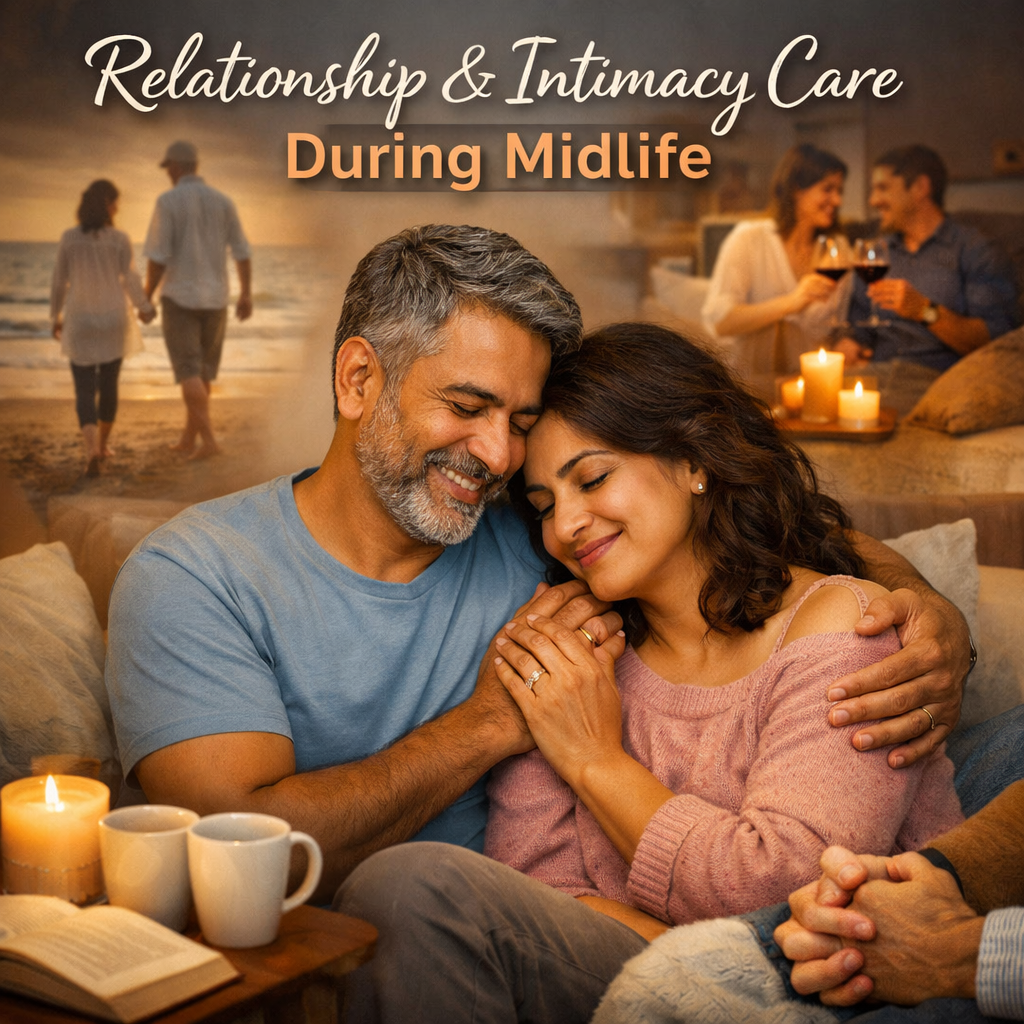
Relationship and Intimacy Care During Midlife
Hormonal shifts, stress, and life transitions can affect intimacy and communication. Midlife is often when couples need the most support, and counseling can restore trust, connection, and confidence.
Common challenges
- Low desire or discomfort during intimacy
- Communication gaps and emotional distance
- Stress, caregiving fatigue, and time pressure
- Past conflicts resurfacing during life changes
How counseling helps
Certified counseling provides a safe space to rebuild communication, address expectations, and restore intimacy. It also helps couples navigate divorce, infidelity, and long-term relationship maintenance with dignity and clarity.

When to seek support
If repeated conflicts, emotional disconnection, or intimacy concerns persist, early counseling is often the most effective step. Dr. Shawana Mufti offers confidential marriage and sexual counseling tailored to modern relationship challenges.
Simple steps couples can take to reconnect
- Set aside uninterrupted time to talk without distractions
- Approach hormone-related changes as a shared health topic, not a personal failing
- Seek medical evaluation if physical discomfort is affecting intimacy
- Consider counseling early, rather than waiting until conflicts escalate
Frequently asked questions about midlife relationship counseling
Is counseling only for couples in crisis? No. Many couples seek counseling proactively to strengthen communication and prevent small issues from growing.
Can hormonal changes really affect a relationship? Yes. Hormonal shifts during perimenopause and menopause can influence mood, energy, and desire, which is why medical and relationship support often work best together.
Is counseling confidential? Yes. Sessions are conducted in a private, confidential setting tailored to each couple's needs.